March 6, 2026
Rovos Rail: The Luxury Train Journey Across Southern Africa
Most people planning a trip to Africa think in terms of flights: Johannesburg to Nairobi, Cape Town to Zanzibar, connecting through Dubai. The map gets drawn in the air. Rovos Rail draws it differently.
Operating since 1989, Rovos Rail is one of the world’s few genuine luxury train experiences, connecting Cape Town, Pretoria, Victoria Falls, Namibia, Durban, and Dar es Salaam across 12 routes. The train carries a maximum of 72 guests across 36 suites. It moves slowly, by design, averaging 37 miles per hour through some of the most varied terrain on the continent. Outside your window, southern Africa does not blur past. It settles in.
If you have not heard of it, you are not alone. Rovos Rail is one of the more frequently overlooked options in African travel, even among experienced travelers. That tends to change after the first conversation.
What Sets Rovos Rail Apart
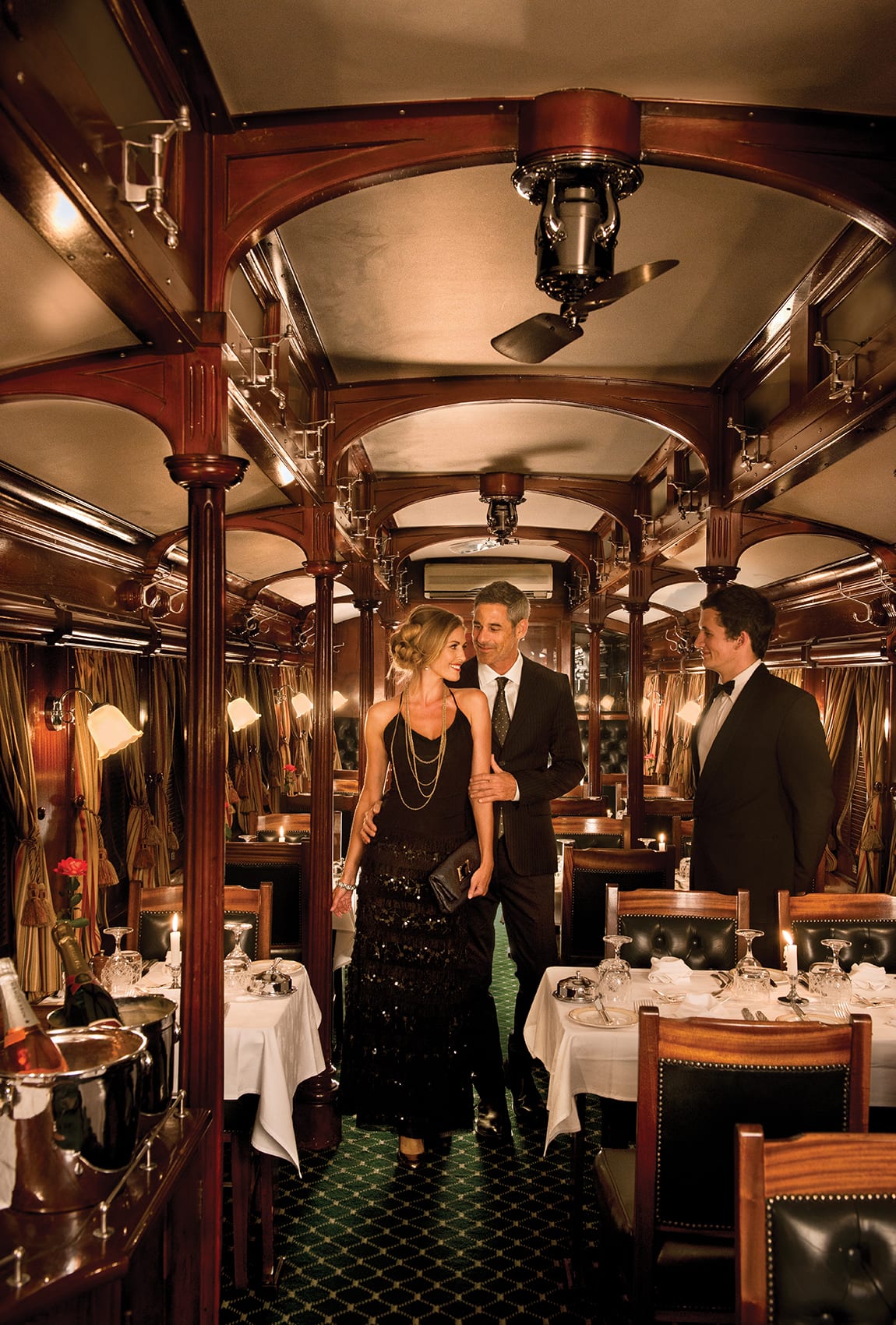
Luxury trains exist in several parts of the world, but few operate at this level of consistency or longevity. Rovos Rail draws its atmosphere from the great African rail journeys of the early 20th century: polished wood interiors, cut crystal, formal dinners each evening, and staff who know your name by the first night.
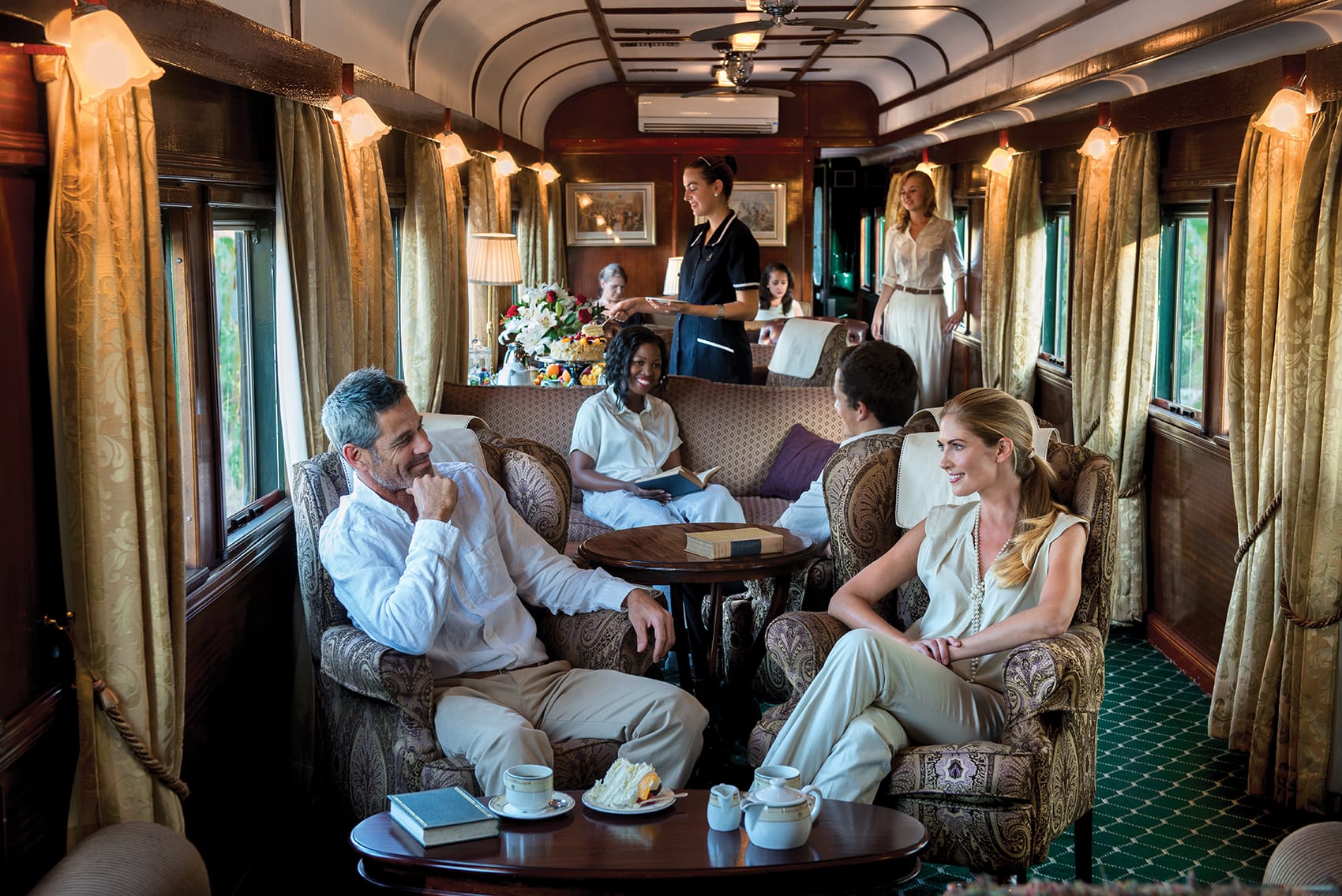
The experience is contained. There are no airports mid-journey, no repacking between locations, no navigating unfamiliar transfers. Three public cars anchor the social life on board: a lounge car, a dining car, and an observation car at the rear. Multi-course meals are paired with South African wines throughout. There is no Wi-Fi, which is either a selling point or a dealbreaker depending on how you travel.
Dinner is formal. Jackets and dresses are expected, and that formality is not incidental. It is part of what the experience is. On select routes, founder Rohan Vos greets passengers personally and walks them through the station and locomotive works in Pretoria.
One practical note that says something about who this train knows it attracts: safety goggles are provided for guests who cannot resist leaning out into the wind from the observation car.
The Rovos Rail Routes
Rovos Rail offers journeys ranging from 48 hours to 16 nights. Each itinerary runs as a fully self-contained experience, with the train itself as much the point as the destinations along the way.
Cape Town to Pretoria
Three nights crossing South Africa’s wine country, the Great Karoo desert, and the Highveld. Stops include the Victorian village of Matjiesfontein and the Kimberley Big Hole, where over 2,700 kilograms of diamonds were extracted by hand during the late 19th century. This is the most accessible entry point for first-time Rovos travelers.
Victoria Falls
A four-night journey that crosses the Tropic of Capricorn and runs 114 kilometers through Hwange National Park, where wildlife sightings from the observation car are common, before arriving at the Falls. It pairs well with a lodge stay on either end. I’ve written more specifically about what that journey covers here.
Namibia
A desert crossing through the country’s vast interior, with the Skeleton Coast and Sossusvlei within reach. The Namibia itinerary suits travelers who already know southern Africa’s more traveled circuits and want something less conventional.
Dar es Salaam
Now extended to 16 nights for 2026 departures, this transcontinental crossing moves from Cape Town through multiple countries to the East African coast. A two-night stay at a game lodge in Madikwe Reserve is included mid-route. This is the serious commitment. Plan the rest of your Africa itinerary around it.
Suites and Inclusions with Rovos Rail
All suites include real beds (not fold-down berths), writing desks, and ensuite bathrooms. Deluxe Suites have air conditioning and windows that open for photography or fresh air. Royal Suites add a full bathtub.
All meals are included, paired with South African wines and classic cocktails. Excursions can be added to most journeys, including access to some of South Africa’s top golf courses, direct connections to safari lodges, and dedicated wine programming on the Cape Winelands route.
Who This Train Works For
Rovos is not for every traveler, and it does not try to be. It works particularly well for:
- Honeymooners who want privacy, unhurried pacing, and a setting that handles the atmosphere without any effort required on their part.
- Experienced travelers and trip collectors who have spent time on the Venice Simplon-Orient-Express or the Royal Scotsman. Rovos belongs in that conversation.
- Romantic travelers who appreciate the sustained elegance of formal dinners, silver service, and wood-paneled interiors. That level of consistency is rare in modern travel.
- Travelers who prefer land to air, especially for long-haul African itineraries where the connections between destinations can feel as disjointed as the flights.
What to Pair It With
Rovos works as a standalone reason to visit southern Africa. It also anchors a longer itinerary well.
Safari: Several routes connect directly with lodges in South Africa, Botswana, and Zimbabwe. The transition from bush camp to train (or the reverse) is one of the better sequencing decisions in African travel.
Cape Town and the Winelands: Beginning or ending with a few days in Cape Town adds a natural counterpoint. The Winelands extend that regional depth.
Victoria Falls: Arriving at the Falls by train is considerably more satisfying than arriving by transfer van. If the Falls are on your Africa list, this is worth considering as the delivery mechanism.
Continental itineraries: Travelers covering East or North Africa first can close the loop heading south on Rovos. There is something to be said for having crossed the continent under your own continuous momentum.
A Few Practical Notes
Booking Rovos Rail typically requires working with a travel advisor, as availability on key departures moves faster than most travelers expect. The 2026 Dar es Salaam extension is worth flagging specifically, as the extended 16-night format is new this year.
Rovos is not a budget option, and it is not designed to be. It is a deliberate choice to spend time rather than cover ground, and the value proposition rests on that distinction. If that framing appeals to you, it is worth the conversation.
If Rovos Rail is on your radar, or if you are building an Africa itinerary and want to understand whether it fits, you can book a planning call at livelargetravel.com/calendar.
You May Also Find These Interesting
- What to See and Do in South Africa for the Best Experience
- Luxury African Safari Planning: A Travel Advisor’s Guide
- African Safari Destination: Botswana
- Rovos Rail to Victoria Falls: What the Journey Actually
About the Author
Karen Aikman is the founder of Live LARGE Travel, a Virtuoso-affiliated boutique travel agency. She designs itineraries with thoughtful pacing, smart routing, and a clear-eyed view of what travel actually requires on the ground. She writes regularly about destination intelligence, expedition travel, and planning decisions that hold up once you’re there. Whether you’re dreaming of a bucket-list adventure or a seamless luxury getaway, click here to schedule a call with Karen and start planning your unforgettable journey.

Sharing in more detail our favorite destinations, experiences, itineraries, cruise lines, tips, trends, and all things travel.
Inspiring Spirits
Expanding Horizons
travel tips
Cruise
Travel Inspiration
As a proud Virtuoso advisor, I love having access to some of the world’s most extraordinary adventures. If you're the adventurous type, this issue is for you.
From polar expeditions to jungle escapes, The New Adventures edition of Virtuoso’s magazine is packed with unforgettable travel ideas—and you can have it, free.
Just drop your email below and I’ll send it right over.
Featured Travel Inspiration from Virtuoso